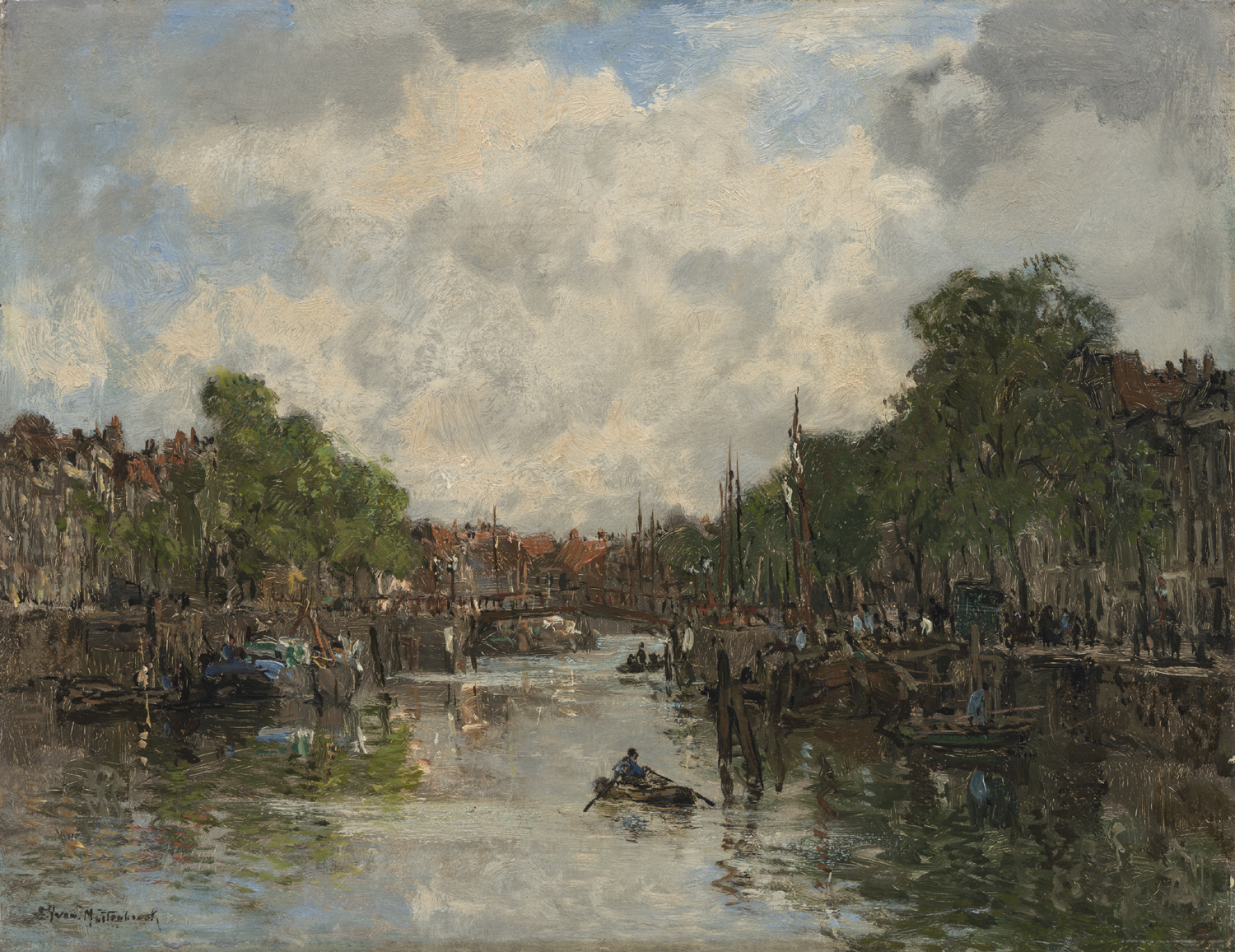
Johan Hendrik Van Mastenbroek
Dutch, 1875 – Rotterdam – 1945
At a certain point in his career, Mastenbroek showed increasing interest in the changing Dutch landscape, which was industrialising rapidly. Modern motor boats, steam ships, steel bridges and sometimes canes and dockworkers appear in his works. The turn of the century appeared to be a both an exciting time: Rotterdam was developping into a world harbour. In 1916 there was (again) a big flood in the Zuiderzee area, which van Mastenbroek followed with great interest and documented in several drawings. In 1920 the Dutch government finally started the Zuiderzee Works: the biggest land reclamation and water drainage work ever to be undertaken.
Together with a few other artist, Van Mastenbroek was commissioned to document the Zuiderzee Works. He painted a hugh milestone: the closing of the Afsluitdijk. Today, the Afsluitdijk, a 32 km long dike, is damming off the Zuiderzee, a salt water inlet of the North Sea, and turning it into the fresh water lake of the IJsselmeer. The dam serves as a sea barrier to protect the inland against flooding. Althought the Dutch ministry only commissioned three works by Van Mastenbroek, which the artist finished in 1931, Van Mastenbroek kept working on the subject. During his lifetime Johan Hendrik van Mastenbroek exhibited many of his ‘Zuiderzee works’ and even after his death they remained important works, both due to their artistic quality as well as historic value.
Paintings, watercolours and drawings by Johan Hendrik van Mastenbroek in the collection of Kunsthandel Bies:
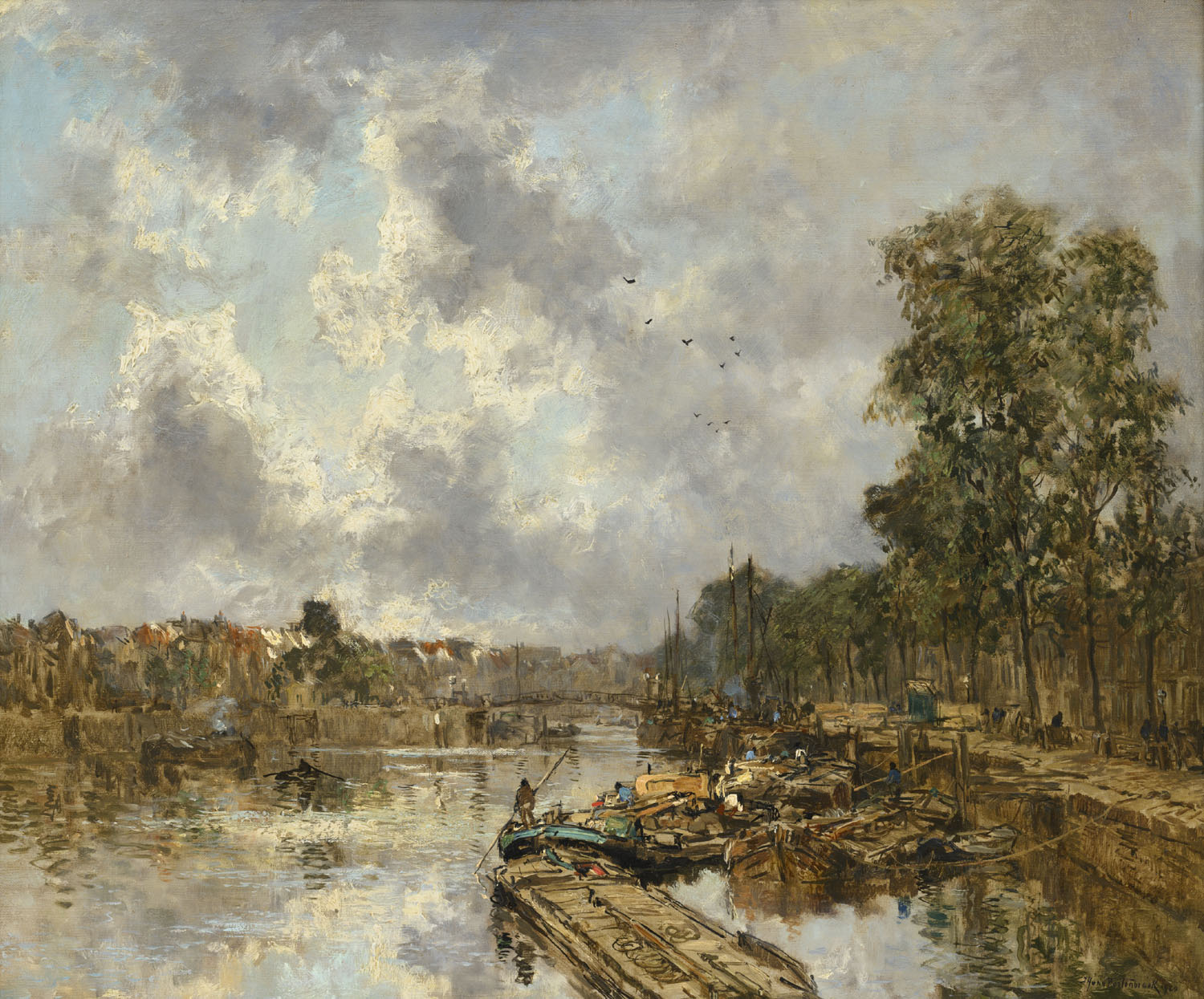
Rotterdam, Nieuwe Haven; Sun and Clouds
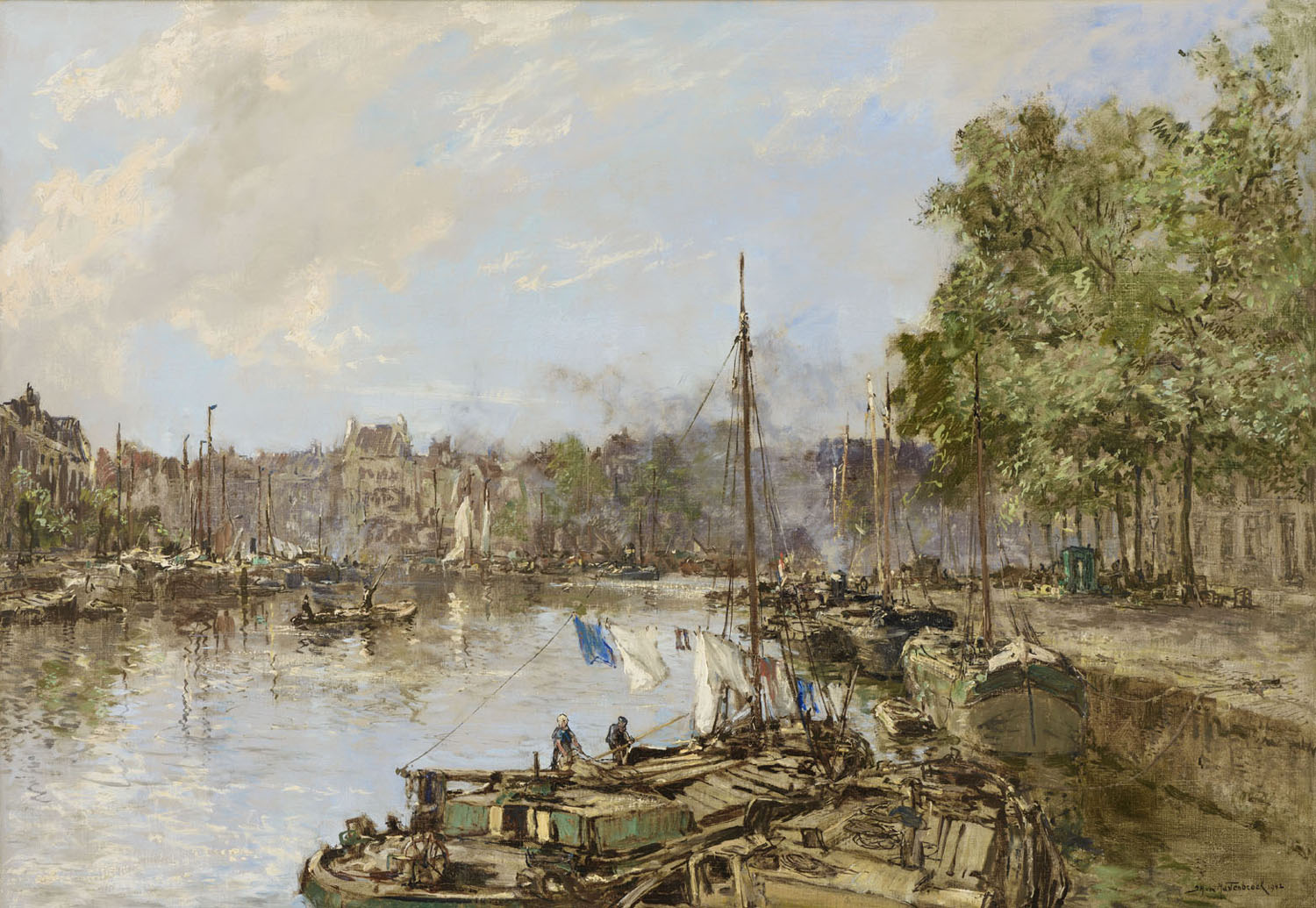
Rotterdam, a view of the Wijnhaven, (Laundry Day)